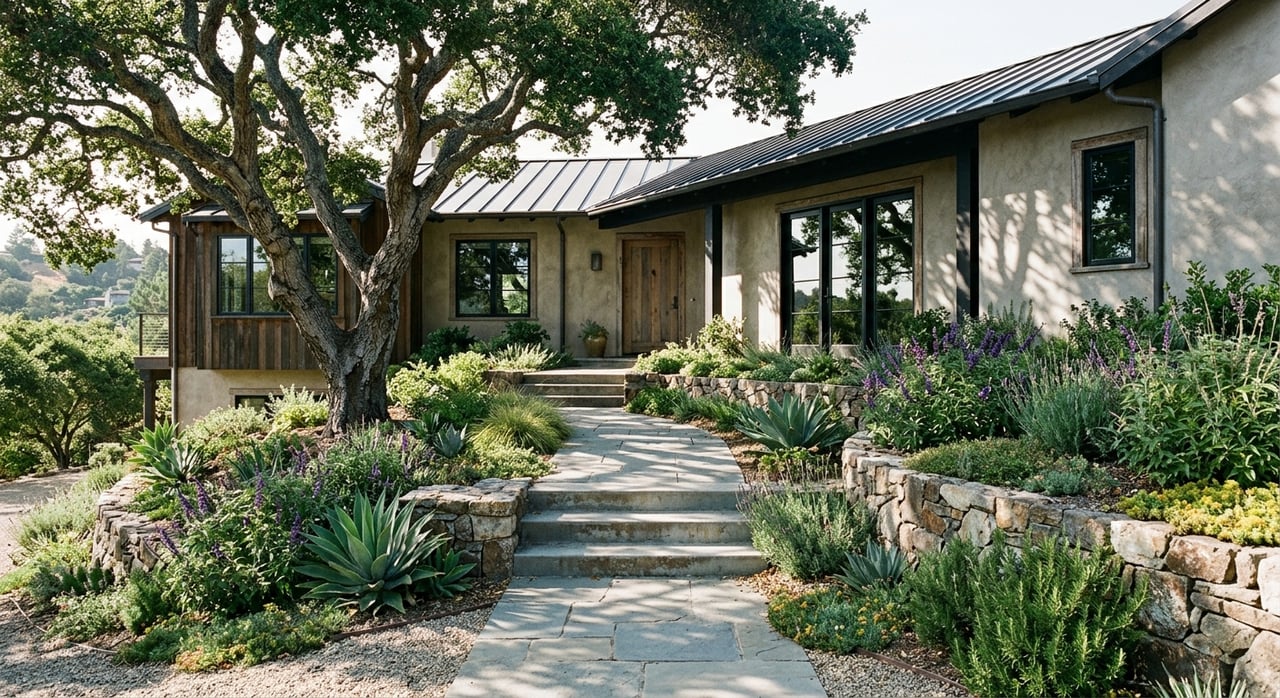
If you are trying to decide between a hill neighborhood and a valley neighborhood in Novato, you are really choosing between two different ways of living in the same city. One side may offer more elevation, preserve access, and separation between homes, while the other may offer easier commuting, more housing variety, and a more even day-to-day feel. Understanding those tradeoffs can help you focus your search and make a more confident move. Let’s dive in.
Novato sits within a ring of distinct natural features, including Burdell Mountain, Big Rock Ridge, Little Mountain, and San Pablo Bay. Its developed core is centered in a relatively flat valley connected to Novato Creek, while steeper terrain frames the edges of town. That geography is a big reason hill and valley neighborhoods can feel so different.
Novato has a Mediterranean climate with dry summers and mild, wet winters. Within that broader pattern, elevation, slope, and exposure can affect how a neighborhood feels from one block to the next. In practical terms, many hill locations feel breezier and more exposed, while valley locations often feel more sheltered and moderated.
Hill neighborhoods in Novato often appeal to buyers who want a stronger connection to the surrounding landscape. These areas are more likely to offer elevation changes, views, shade patterns tied to slope and aspect, and quick access to preserve land. The tradeoff is that daily living can feel a bit less uniform from one property to another.
Because hill and ridgeline locations are more exposed to wind and terrain, they can feel different across seasons and even within the same day. Some locations may stay cooler with breezes or north-facing exposure, while others may feel more sun-exposed depending on orientation. That kind of variation is part of the appeal for many buyers.
Novato’s zoning rules make the hill-versus-valley difference especially clear. In lower-density districts, minimum lot sizes can reach 80,000 square feet in hillside and rural areas at the edge of town. By contrast, lot minimums in flatter valley-floor areas can be as small as 7,500 square feet.
The city’s Hillside and Ridgeline Protection Ordinance adds another layer. It applies to parcels with average slopes of 10 percent or more, and lots with average slopes above 25 percent have no development potential under that ordinance. Single-family homes are also subject to size limits unless an exemption applies.
Those rules help explain why hill neighborhoods often have:
That does not mean every hill home is larger or every setting is more private. It does mean the overall pattern tends to be lower density and more shaped by topography.
If preserve access matters to you, hill neighborhoods have a strong case. Mountain-adjacent parts of Novato connect more directly to preserves and trail systems tied to places like Mount Burdell, Indian Tree, Verissimo Hills, Pacheco Valle, Indian Valley, and Little Mountain.
These trail networks often feature ridge routes, fire roads, redwood groves, shade, and more elevation gain. For buyers who want to step out into open space and feel immersed in Novato’s natural setting, that can be a major advantage.
Valley neighborhoods offer a different kind of convenience. They tend to be flatter, more sheltered, and more consistent in how they function day to day. Many buyers are drawn to these areas because they can simplify commuting, errands, and daily movement around town.
Valley living does not mean giving up access to outdoor space or single-family homes. Novato remains primarily residential overall, and many central and southern areas still include one- and two-story homes. The difference is that valley neighborhoods usually offer more housing formats and more infrastructure-oriented connections.
South and central Novato include a broader mix of housing types. City planning documents describe the area south of Novato Boulevard as mixed housing that includes detached homes, apartment buildings, townhomes, and condominiums. The Southwest area includes mostly one- and two-story single-family homes, along with some two- and three-story apartment buildings along Ignacio Boulevard and Alameda del Prado.
Hamilton is another good valley-floor example. It is a planned community with residential, commercial, open space, and civic uses. That mix helps illustrate how valley neighborhoods can offer more variety in both home type and neighborhood layout.
In general, valley areas are more likely to offer:
For buyers who want more options by price point, layout, or maintenance level, the valley often creates a wider field of choices.
Valley neighborhoods are not short on outdoor access. The experience is just different. Instead of immediate access to steeper preserve trails, these areas often connect to flatter paths, levee walks, bayfront routes, and multi-use corridors.
At Hamilton, the Bay Trail runs along the levee on the bay side, and the Reservoir Hill Vista Trail begins near Hamilton Parkway and climbs to overlooks over San Pablo Bay. The city’s Olive Avenue project also reflects how some valley corridors are designed to support everyday walking and biking connections.
For many buyers, this means valley neighborhoods support an active lifestyle in a more everyday way. You may be closer to practical walking and biking routes, while hill neighborhoods are more likely to put preserve-style trail access right at the edge of the neighborhood.
For many buyers, commute patterns are where the difference becomes most practical. Highway 101 runs north-south through Novato and provides regional access, but it also creates local connectivity challenges in some areas. Where you live in relation to 101, SMART, and key bus nodes can shape your routine in a big way.
Novato has three SMART stations:
San Marin and Hamilton stations both have nearby Marin Transit and Golden Gate Transit stops. The Downtown SMART station is about a half mile from the Novato Transit Center on Redwood Boulevard, which is served by both Marin Transit and Golden Gate Transit.
Marin Transit Route 57 connects Downtown San Rafael and Novato, serving Hamilton, Ignacio, Indian Valley College, the Rowland and Redwood corridor, and Novato San Marin SMART Station. Golden Gate Transit also lists Novato-San Francisco routes and identifies the Novato Hub at Redwood and Grant, along with the Highway 101 at Rowland Boulevard park-and-ride, as important access points.
Valley and south-Novato locations near SMART stations, Redwood and Grant, Rowland Boulevard, and the Novato Transit Center generally offer the most flexibility. If you want multiple ways to get around, including rail, bus, and freeway access, valley locations often make that easier.
Hill and edge-of-town locations can still work well, especially if you drive regularly. But the first part of the trip is more likely to be car-dependent because transit stations and major bus nodes are concentrated in flatter and more central corridors.
The best fit depends less on which side is “better” and more on how you want to live. Some buyers prioritize scenery, trailheads, and a lower-density setting. Others want a smoother commute, a flatter neighborhood pattern, or more home-type options.
Here is a simple way to think about it.
In Novato, neighborhood fit is not just about price or square footage. It is also about how the land itself shapes comfort, access, and daily rhythm. Two homes with similar specs can live very differently depending on whether they sit on a slope, near a preserve, close to a station, or within a flatter corridor.
That is why a local, property-by-property lens matters. When you understand how Novato’s hills and valleys affect housing type, trail access, and commuting, you can narrow your search faster and focus on the places that truly match your lifestyle.
If you are weighing hill versus valley living in Novato, working with a local expert can help you read beyond the listing and understand how each location really functions. For tailored guidance on Novato neighborhoods and a thoughtful buying or selling strategy, connect with Donna Goldman.
Compass
490 Magnolia Street Larkspur, CA 94939 891 Beach Street San Francisco, CA 94109